Class III in children: a mini-screw expander and face mask in a borderline case
An 11-year-old with a skeletal Class III: how Dr. Doniano treated it with a mini-screw expander, a face mask and fixed braces.
By Dr. Doniano Xhanari

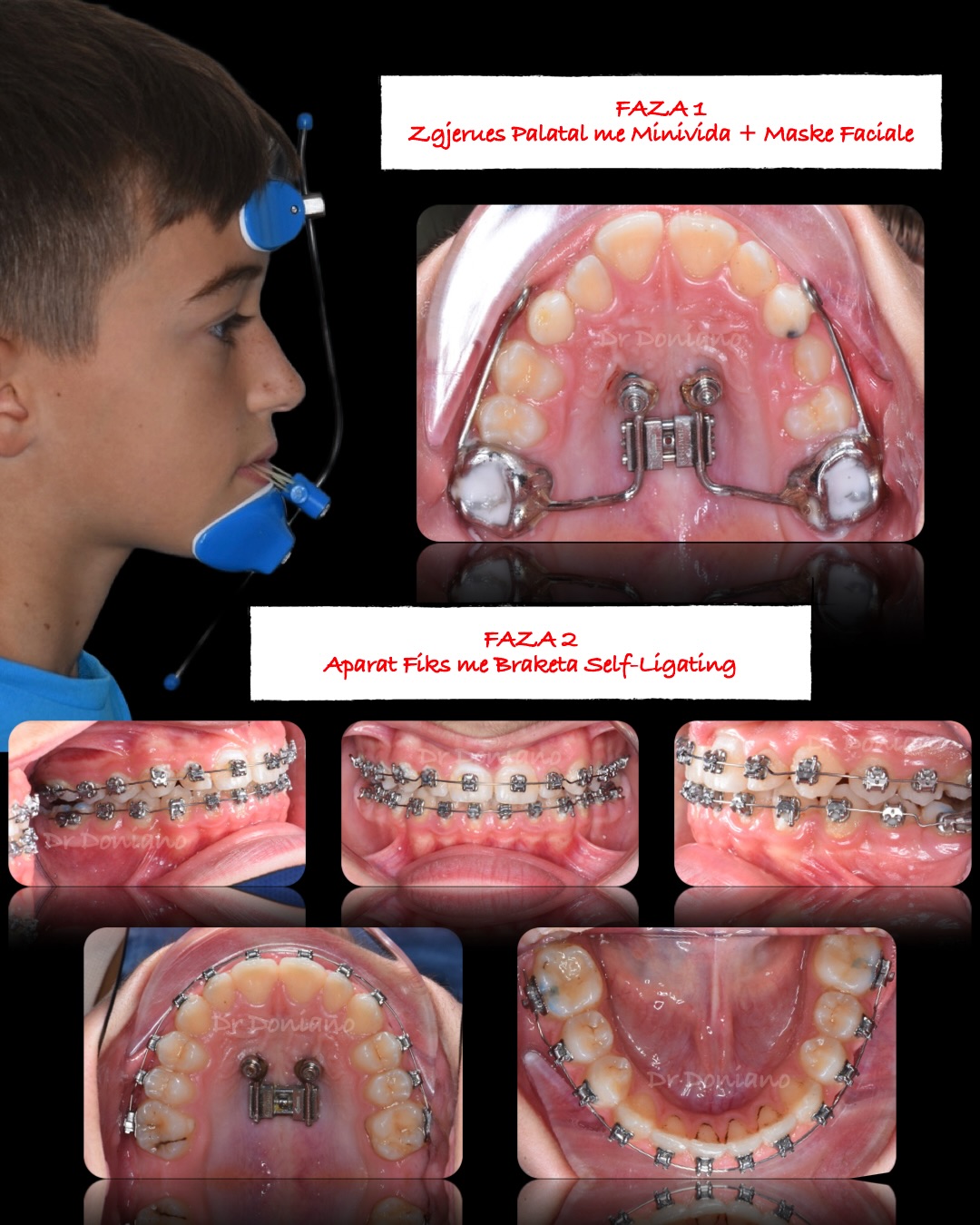
An 11-year-old patient came in with a skeletal Class III malocclusion, in the late mixed dentition, when the mouth still has baby teeth alongside permanent ones. The case had an extra difficulty: loss of posterior anchorage, caused by multiple carious lesions (decay) in the back teeth.
Why not just a traditional face mask?
In a borderline case like this, according to Dr. Doniano Xhanari, a traditional face mask would not be stable if it relied on the molars alone. So a more modern, biomechanically more controlled approach was chosen.
Treatment in two phases
Phase 1, orthopaedic:
- a palatal expander anchored on mini-screws;
- protraction with a face mask;
- preserving posterior anchorage and better skeletal control.
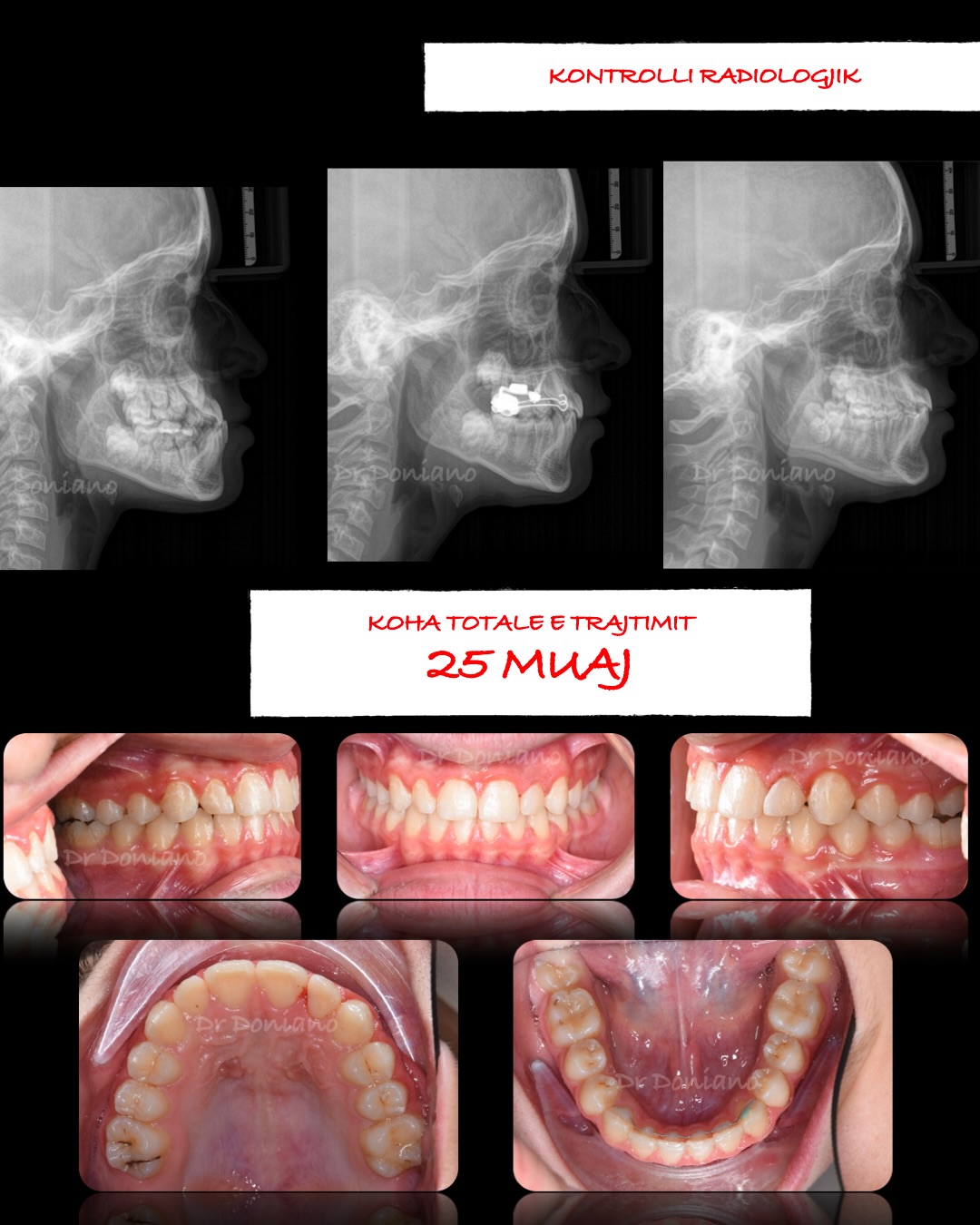
Phase 2, orthodontic: fixed self-ligating braces, to finish treatment and detail the occlusion, meaning the way the teeth meet.
The result
According to Dr. Doniano, this borderline case was resolved without compromising anchorage, using new technology and more efficient biomechanics.
What is Class III? (general information)
In Class III, the lower teeth sit in front of the upper teeth, often because the upper jaw is smaller or further back, or the lower jaw further forward. Face masks are usually used in growing children to encourage the upper jaw forward. The right timing and solution are decided after an orthodontic assessment.
Results vary from patient to patient. For a personal assessment, message us on WhatsApp.
Related reading
To understand why similar appliances can have different aims and how a family experiences treatment, continue with these articles.
Gallery